
Meta description: Learn how to finance bin cleaning equipment, understand soft and hard credit pulls, compare loans and leases, and evaluate tax considerations for a trash can cleaning business.
Starting a trash can cleaning business takes more than buying a pressure washer and finding a few customers. You may need a truck or trailer, water tanks, wastewater recovery, insurance, registration, fuel, marketing, software, repairs, storage, and enough working capital to keep the business moving while your route grows.
That’s why many entrepreneurs choose to finance bin cleaning equipment instead of paying the entire cost in cash.
Financing isn’t automatically better than cash. The real question is simple: Can the equipment generate enough reliable revenue to support the payment, operating expenses, and a reasonable profit? If the answer is yes, using credit strategically may help you put revenue-producing equipment to work sooner while preserving cash for the rest of the business.
Why Finance Bin Cleaning Equipment Instead of Paying Cash?
Imagine spending nearly all your available cash on a truck, trailer, or skid system. You own the equipment outright: but what happens when you need to pay for:
- Commercial insurance
- Vehicle registration and taxes
- Fuel and water
- Wastewater disposal
- Website and marketing
- Scheduling and routing software
- Repairs and replacement parts
- Payroll or contractor labor
- Storage or parking
- Unexpected slow weeks
- Customer-acquisition costs
Cash provides ownership and avoids loan interest. That’s a real advantage! But keeping some cash available can be just as important, especially during the launch phase of a trash can cleaning business.
Financing may help you:
- Preserve working capital
- Start serving customers sooner
- Build recurring residential routes
- Add commercial dumpster-cleaning services
- Keep an operating reserve for repairs and slow seasons
- Invest in marketing instead of tying every dollar up in equipment
Here’s the thing: a financing payment must fit your actual route plan: not an optimistic spreadsheet. Build your budget around realistic stops, pricing, fuel, water, disposal, labor, maintenance, insurance, and taxes. Then stress-test it. What happens if your route takes three months longer to fill than expected? What would you do if a pump or tow vehicle needs repair?
That kind of planning is absolutely critical.
Soft Pull vs. Hard Pull: What Happens to Your Credit?
Many people hesitate to apply for bin cleaning equipment financing because they’re worried about a hard credit inquiry. That concern is understandable, but one or two hard pulls are usually not a financial disaster.
What Is a Soft Credit Pull?
A soft inquiry generally happens when:
- You check your own credit
- A lender offers prequalification
- A creditor reviews an existing account
- A company checks your credit for promotional or background purposes
Soft inquiries generally do not affect your FICO Score. They may still appear on a credit report, but they aren’t used the same way as hard inquiries in credit scoring.
What Is a Hard Credit Pull?
A hard inquiry commonly happens when you submit a formal application for a loan or equipment-financing program. A hard pull may cause a small, temporary score decrease. The exact effect varies based on your credit profile, the scoring model, and your overall application history.
For many applicants, one hard inquiry has a relatively small effect. A couple of inquiries are often manageable, particularly when your payment history and balances are strong.
According to FICO’s guidance on credit inquiries, hard inquiries may remain visible on your report for up to two years, while FICO scoring generally considers recent inquiries: often those from the last 12 months. The impact typically matters less as time passes, but nobody should promise you an exact number of points or an exact recovery schedule.
Your payment history, credit utilization, balances, debt levels, and missed payments usually matter much more than one or two equipment-financing inquiries.
Before applying, ask the lender:
- Is prequalification a soft pull?
- Will the formal application be a hard pull?
- Which credit bureaus will you check?
- Will the account report to personal credit, business credit, or both?
- How will the inquiry and account be reported?
That five-minute conversation can remove a lot of uncertainty!
Should You Apply With Multiple Equipment Lenders?
Shopping for a better financing offer makes sense. However, don’t assume commercial equipment-financing inquiries receive exactly the same rate-shopping treatment as auto, mortgage, or student-loan inquiries.
Those consumer-loan categories may receive special treatment under certain scoring models and time windows. Commercial equipment financing can be evaluated and reported differently. Each lender may also use a different bureau, underwriting process, or application structure.
We recommend that you:
- Gather your documents before applying.
- Ask which steps use soft or hard inquiries.
- Compare lenders intentionally.
- Avoid submitting applications everywhere at once.
- Review the complete offer: not just the monthly payment.
A slightly lower payment may come with a longer term, higher total interest, a balloon payment, or additional fees. The lowest monthly number isn’t always the best deal.
Consumer Interest Rates vs. Commercial Equipment-Financing Rates
You may see consumer auto-loan rates advertised below the rates offered for commercial equipment financing. That difference doesn’t automatically mean a commercial offer is unfair or that financing is a bad decision.
Consumer auto lending often benefits from:
- Standardized vehicles
- Predictable collateral values
- Large resale markets
- High lending volume
- Established personal-income underwriting
- Easily comparable loan data
Commercial equipment financing can involve more uncertainty. A startup may have no operating history, tax returns, or proven cash flow. Specialized equipment may have a narrower resale market. Custom packages, recovery systems, wash heads, lifters, and other components may be evaluated differently than a standard passenger vehicle.
A lender may also require:
- A personal guarantee
- A larger down payment
- More documentation
- Shorter terms
- Higher interest to offset risk
Compare these items carefully:
- APR
- Total repayment
- Interest cost
- Term length
- Origination or documentation fees
- Down payment
- Prepayment rules
- Fixed or variable rate
- Balloon payment
- Collateral requirements
- Personal guarantee
- Ownership terms
The goal isn’t to avoid all interest. The goal is to make sure the equipment produces enough gross margin to justify the cost of capital.
Why the Two-Year Business Milestone Can Help
Brand-new businesses often receive more conservative financing terms. That may mean a higher rate, larger down payment, shorter term, or personal guarantee.
After approximately two years of successful operations, many businesses can show a stronger lending story:
- Filed business tax returns
- Bank statements
- Recurring customers
- Documented payment history
- Financial statements
- Route profitability
- Consistent deposits
- Reliable cash flow
- Experience managing business debt
As a result, down-payment requirements and interest rates often improve significantly after a business establishes a track record. But two years is not an automatic qualification. Improvement depends on profitability, personal and business credit, existing debt, collateral, lender policy, and the specific applicant.
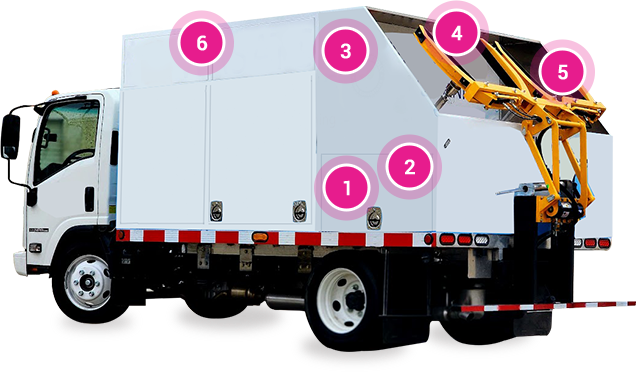
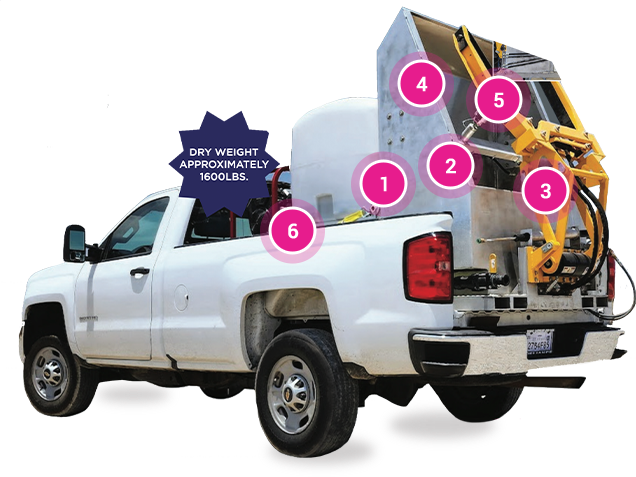
This is one reason starting with equipment that fits your launch plan can be smart. You don’t necessarily need the largest possible system on day one. A properly matched trash bin cleaning trailer for sale, pickup-truck skid system, or compact package may help you establish revenue before adding capacity.
Then, as your route proves itself, you may be in a stronger position to upgrade to a larger trailer or a trash can cleaning truck.
Financing Options for Trash Can Cleaning Equipment
Viking Upfit offers equipment configurations for different launch plans, including:
- Complete truck systems
- Trash bin cleaning trailers
- Pickup-truck skid systems
- Pressure washers
- Wash heads
- Bin lifters
- Fresh-water tanks
- Wastewater recovery systems
- Commercial dumpster-cleaning equipment
- Components and custom packages
A complete truck may involve two related financing considerations: the vehicle chassis and the installed cleaning equipment. A trailer or skid may be a smaller request, but the lender may still evaluate your tow vehicle, payload, trailer weight, insurance, and intended use.
A lender may ask for:
- Equipment proposal or purchase order
- Business plan
- Service area
- Residential or commercial focus
- Pricing structure
- Projected stops per day or month
- Revenue projections
- Expense estimates
- Insurance information
- Water and wastewater plan
- Marketing strategy
- Relevant business experience
- Expected monthly payment
Our cleaning equipment options and turnkey startup packages can help you understand how the equipment, software, marketing, and operations fit together.
Loan vs. Lease: Which Is Better for Taxes?
An equipment loan generally means you purchase and own the equipment, even while the lender has a security interest until the loan is paid.
Potential ownership-related tax considerations may include:
- Depreciation
- Possible Section 179 eligibility
- Possible bonus-depreciation eligibility
- Deductible business interest, subject to applicable rules
- Equity in the equipment as the loan balance declines
The loan principal itself is generally not an ordinary business expense deduction. The equipment cost is typically handled through depreciation or eligible expensing rules, while interest is considered separately.
A lease is different. The lessor may own the equipment, and the agreement may be structured as:
- An operating or tax lease
- A finance or capital lease
- A $1 buyout lease
- A fair-market-value buyout lease
- A return-or-upgrade arrangement
A qualifying operating lease may generally allow the business portion of lease payments to be deducted over time. A finance lease may be treated more like ownership, with an asset, liability, depreciation, and interest components.
The word lease alone doesn’t determine the tax treatment. The actual contract and tax classification do.
Tax Advantages and Important Cautions
Financing an equipment purchase does not necessarily prevent you from claiming depreciation or eligible expensing. Depending on the asset, business use, taxpayer, placed-in-service date, income, and current law, relevant considerations may include:
- Regular depreciation
- Section 179
- Bonus depreciation
- Business-use percentage
- Deductible interest
- Income limitations
- Depreciation recapture
- State tax treatment
- When the equipment is placed in service
The IRS Publication 946 guidance explains that qualifying property is generally depreciated when it is ready and available for business use: not simply when you sign a purchase agreement.
Remember, a deduction reduces taxable income. It is not the same as a cash refund, and an immediate deduction may not provide the expected current-year benefit if your business has little taxable income.
Current tax law can change. Talk with a qualified tax professional before choosing a loan, lease, Section 179 election, or depreciation strategy.
Illustrative Cash, Loan, and Lease Comparison
Suppose a hypothetical equipment package costs $100,000. No specific interest rate or tax savings is assumed.
- Cash purchase: You own the equipment immediately and avoid interest, but your available cash falls by $100,000.
- Financing: You preserve more working capital and begin making payments, but you pay interest and must manage a monthly obligation.
- Lease: You may reduce upfront cash needs or gain flexibility, but you may face higher total costs, buyout terms, return conditions, or end-of-term obligations.
The best choice depends on your reserves, route revenue, tax position, growth plan, and risk tolerance: not on one universal rule.
At Viking Upfit, we’re not the lender. Lenders determine approval, rates, down payments, and final terms. We can help you understand equipment capacity, weight, water, wastewater recovery, maintenance, route goals, financing and leasing resources, and your growth plan.
If you’re ready to learn how to start a trash can cleaning business, book a free consultation with Viking Upfit. We’ll help you evaluate the equipment package before you pull the trigger: because the right system should support your business, not overwhelm it.
Important disclaimer: This article is for general education only and is not financial, tax, accounting, legal, or lending advice. Credit impact varies by credit profile and scoring model. Lenders set approval decisions and financing terms. Tax rules, depreciation rules, and lease classifications can change. Consult your lender and a qualified tax professional before applying for credit, signing a loan or lease, or claiming a deduction.
Contact Viking Upfit
Website: VikingUpfit.com
Phone: 210-971-4980
Email: clean@thetrashcancleaners.com
Facebook group: Bin Cleaners Network
Reviews: see our Google reviews