Buying professional trash can cleaning equipment involves much more than comparing tank sizes and prices!
At Viking Upfit, we speak with new entrepreneurs, waste haulers, pressure-washing companies, and established service businesses every day. The same practical questions come up: How much water can my vehicle carry? Should I buy a truck, trailer, or skid? How is wastewater handled? What training and software are included? Can I finance the equipment?
Those are exactly the right questions to ask before investing in a trash can cleaning business.
Viking Upfit builds and supplies complete trucks, trailers, pickup-truck skids, wash systems, lifters, wash heads, components, and custom equipment packages. Specifications vary by model and build, so your proposal, build sheet, purchase agreement, manuals, and OEM documentation always control.
What Type of Bin Cleaning Equipment Should I Buy?
There isn’t one perfect system for every operator. The right choice depends on:
- Your expected route size and daily volume
- The vehicle you already own, or plan to purchase
- Local streets, driveways, and maneuverability
- Water availability and wastewater logistics
- Towing capacity and storage
- Startup budget
- Growth plans
- Whether bin cleaning is your primary service or an add-on
Viking Upfit commonly offers:
- Complete truck-mounted systems
- Trailer-mounted bin cleaning systems
- Pickup-truck skid systems
- Single- and dual-bin configurations
- Pressure-washing systems
- Lifters, wash heads, and replacement components
- Custom equipment packages
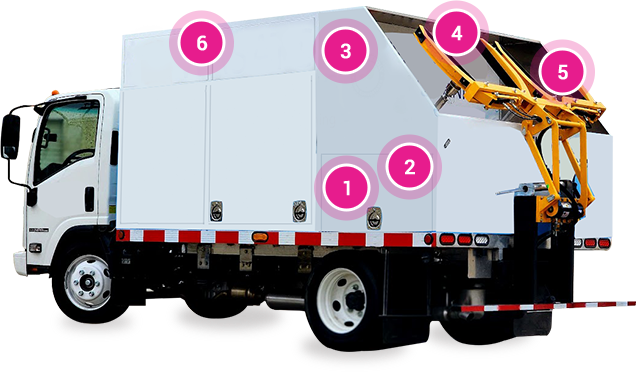
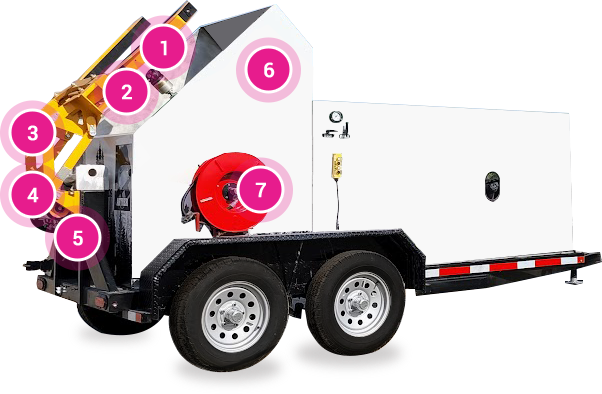
A truck can be an excellent choice for a larger residential route. A trailer may provide a more economical entry point, especially for an existing service company. A skid can be a compact option for a pickup bed, trailer, or stationary setup.
Explore current trash can cleaning equipment options and current inventory before deciding.
How Do GVWR, Payload, and Water Weight Affect My Purchase?
Payload is absolutely critical!
A basic calculation is:
GVWR − completed empty weight = available payload
Water weighs approximately 8.34 pounds per gallon. That adds up quickly. A 500-gallon tank contains more than 4,100 pounds of water before you add the chassis, tanks, pumps, burner, hose, recovery equipment, tools, fuel, and operator.
That’s why we evaluate the completed equipment weight, not just the vehicle’s advertised tow rating or empty weight.
For truck builds, the chassis, engine, GVWR, completed weight, and available payload must be confirmed for the specific unit. For a trailer, you also need to evaluate loaded trailer weight, tongue weight, tow-vehicle payload, axles, tires, hitch ratings, trailer brakes, and electrical connections.
A vehicle that can pull an empty trailer may not be suitable for a fully loaded operating trailer. Always verify the actual specifications before purchase.
Do the Clean-Water and Wastewater Tanks Both Become Full?
Normally, no. In a properly operated fresh-water-to-wastewater system, water transfers from one side of the system to the other.
You begin with clean water. As you wash containers, that water is recovered into the wastewater tank. The clean-water tank level decreases while the wastewater level increases.
This matters because you typically don’t operate with both tanks completely full at the same time. Your route planning, operating weight, and disposal schedule should reflect the actual water transfer.
Does Viking Upfit Recycle Wastewater?
Viking Upfit generally prefers using fresh water for each cleaning while capturing recovered wastewater separately.
That approach can help provide:
- Better sanitation
- Less odor
- Reduced cross-contamination between containers
- Simpler filtration and maintenance
- More consistent cleaning results
Recycling systems may be appropriate in some applications, depending on water availability, local rules, system design, and operating goals. We don’t claim that recycling is always wrong, or that fresh water is universally more environmentally friendly.
The practical point is that dirty recovery water can contain organic material, food residue, grease, liquids, and other contaminants. Reusing it requires careful engineering, filtration, maintenance, and operating discipline. For many professional operators, fresh water to wash and separate recovery for disposal is the simpler solution.
How Are Solids Separated From Wastewater?
The recovery hopper provides an initial separation stage. Larger trash, food residue, and solid debris are collected above a screen while wastewater moves into the recovery tank.
The operator removes the collected solids separately. This helps keep larger debris out of the recovery plumbing and makes the wastewater more manageable.
Like any working part of the business, the hopper and screen need regular attention. A few minutes of cleaning can prevent bigger maintenance problems later!
How Much Filtration Maintenance Is Required?
Maintenance depends on the exact system configuration. Many systems use reusable filters that can be removed, washed, inspected, and reinstalled. The recovery hopper and screen should also be cleaned as debris accumulates.
Your maintenance routine should include:
- Inspecting filters before and after route days
- Removing accumulated solids
- Checking hoses, fittings, and screens
- Inspecting pumps and plumbing for leaks
- Following the equipment manual and OEM schedules
Simple maintenance is better than complicated maintenance you never perform.
What Container Sizes Can the Equipment Clean?
Depending on the lifter and configuration, Viking Upfit equipment is generally designed to handle common residential roll carts ranging roughly from 30 to 96 gallons.
Compatible container sizes can vary by lifter, wash-head setup, and build. Commercial, institutional, healthcare, and specialty containers may require a custom evaluation.
If you have a specific container type, send us its dimensions and weight before buying. That quick step can save you from trying to fit a square peg into a round wash bay!
Can I Clean One or Two Bins at Once?
Yes, depending on the equipment configuration.
Dual-lifter systems may allow an operator to clean one or two containers, while single-bin systems can be a smart choice when vehicle size, budget, simplicity, or route requirements matter more than maximum throughput.
Two bins at once can improve productivity, but only when the rest of the system: water capacity, recovery, lifting, wash-head performance, and route logistics: is designed to support it.
How Much Pressure and Flow Do I Need?
Specifications vary, but a common professional configuration may operate around 8 GPM and 3,500 PSI.
Those numbers are examples: not universal specifications for every Viking Upfit system.
Pressure and flow must work together. The pump, engine, plumbing, nozzles, wash head, burner, and recovery design all affect real-world cleaning performance. A large PSI number on a sales sheet doesn’t mean much if the wash head or plumbing cannot effectively use it.
We recommend comparing the complete system, not just the biggest number in the advertisement.
How Hot Does the Wash Water Get?
Hot-water systems operate largely through temperature rise: the increase in temperature from the incoming water to the heated outlet water.
A thermostat capable of reaching 200°F or more does not mean the outlet water constantly reaches that temperature. Actual results depend on:
- Incoming water temperature
- Flow rate
- Burner capacity
- Ambient conditions
- Operating settings
- System configuration
For example, a system providing a 100–140°F temperature rise will perform differently with 50°F incoming water than with 90°F water.
The wash head matters just as much. A pressure washer is only as effective as the cleaning assembly that receives and uses that pressure. Viking Upfit matches the wash head and related components to the intended system rather than treating every unit as identical.
Do All Viking Upfit Units Use the Same Components?
No. Engines, pumps, burners, wash heads, lifters, generators, chassis, and other components can change between models, production years, and individual builds.
Availability, technology, performance, reliability, and customer requirements all influence equipment choices. An older video or listing should not be treated as the specification for every current unit.
The current proposal, build sheet, manuals, and OEM documents for your equipment are the information that matters.
What Warranty and Replacement-Part Support Is Available?
Major components generally carry their respective OEM or manufacturer warranties, subject to the applicable terms. Chassis warranties are typically handled by the vehicle manufacturer.
Viking Upfit also provides equipment guidance, troubleshooting help, parts support, and assistance navigating component questions when appropriate. Many serviceable pressure-washing, plumbing, hydraulic, electrical, and consumable parts can be sourced locally or shipped nationwide.
That matters when you’re hundreds of miles from Texas and a small part threatens to cancel an entire route day.
Is Training Included?
Training and education are a major part of the Viking Upfit model. Depending on your package, training may cover:
- Equipment operation
- Cleaning procedures
- Preventive maintenance
- Troubleshooting
- Software
- Marketing
- Route operations
- Logistics and general business operations
Support may also include direct team assistance and access to an exclusive operator network. Exact training, travel, software, and support inclusions must be confirmed in your current proposal.
There’s a big difference between owning a machine and knowing how to operate a profitable service business!
What Are Jobatory and the Website Package?
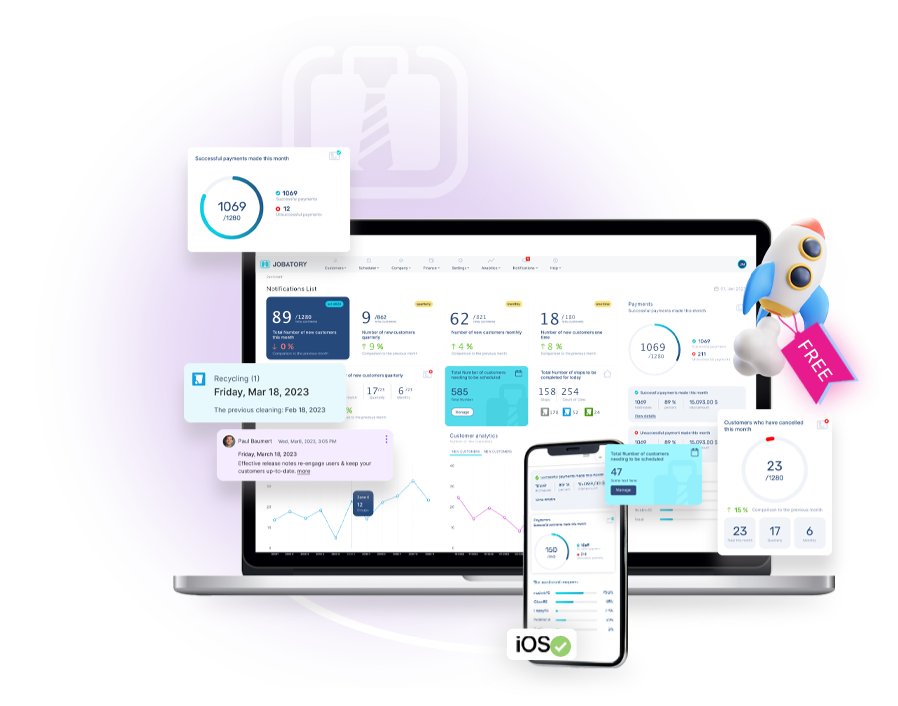
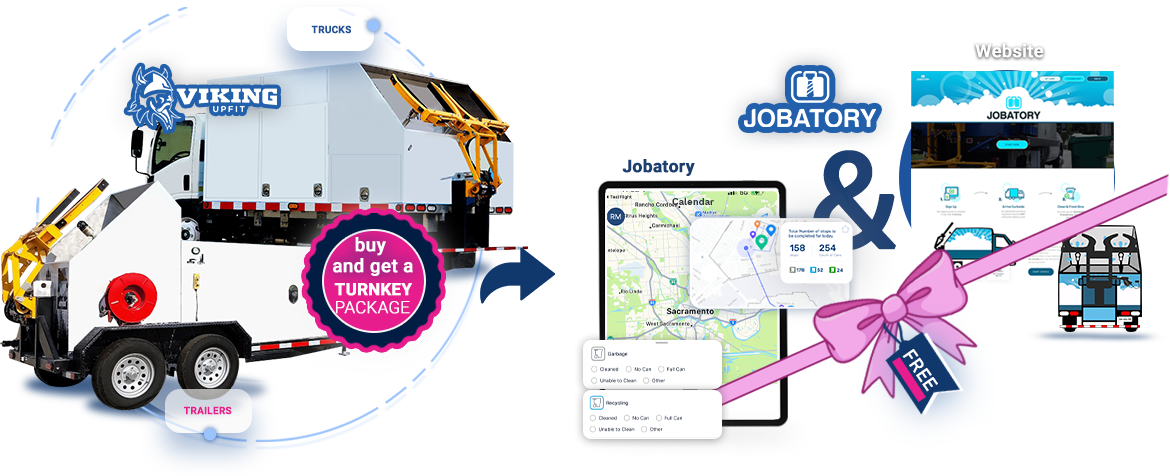
Qualifying new equipment packages may include an initial subscription period for Jobatory CRM, a platform built specifically for bin-cleaning businesses.
Jobatory can help with:
- Scheduling and recurring service
- Route management
- Billing and payments
- Customer communication
- Driver and field updates
- Business automation
Qualifying packages may also include a professionally designed website setup. Website hosting, ownership, domain control, renewal pricing, features, and subscription duration can change, so review the current turnkey package terms and proposal carefully.
Some packages may also include wrap design or installation. Confirm what is included before assuming a wrap, website, software subscription, or accessory is part of your purchase.
What About Wastewater Disposal?
Wastewater is a normal, manageable part of operating a service business!
Car washes, auto-detailing companies, pressure washers, fleet cleaners, carpet cleaners, restaurants, laundromats, pool services, RV dump facilities, and many other businesses deal with wastewater every day. Car-wash runoff may contain oil, grease, detergents, waxes, metals, and road residue. RV black-tank waste involves human sewage and much harsher biological contamination.
That comparison doesn’t eliminate your responsibility: but it should put bin-cleaning wastewater in perspective. You need a clear plan, not panic.
Do not discharge wastewater into a storm drain or unauthorized location. Requirements vary by municipality and wastewater authority. Before starting service, confirm an approved sanitary-sewer discharge point, treatment facility, or other authorized disposal pathway with local authorities and the receiving facility.
A recovery tank is not a disposal permit. Viking Upfit provides equipment information, not legal or regulatory advice. You are responsible for confirming and following the rules in every area where you operate.
What Should I Compare Before Buying?
Don’t compare systems on price, tank size, or PSI alone. Ask:
- What is the completed empty weight?
- What is the loaded operating weight?
- How are solids separated?
- Is wastewater recycled or captured separately?
- What maintenance is required?
- Which components are included?
- What warranties apply?
- Are replacement parts available?
- Is training included?
- What software and website terms apply?
- What are the production and shipping estimates?
- What are the deposit and cancellation terms?
- Who supports me after the sale?
Whether you’re searching for trash can cleaning trucks for sale or a trash bin cleaning trailer for sale, the best equipment purchase is a business decision: not simply a hardware purchase.
Start With a Free Viking Upfit Consultation
What would your ideal first route look like? A residential neighborhood, commercial accounts, or an add-on service for your existing customers?
Viking Upfit can help you compare trucks, trailers, skids, financing or leasing options, route operations, software, wastewater planning, and startup steps. Book a free consultation, call 210-971-4980, or email clean@thetrashcancleaners.com.
You can also join the Bin Cleaners Network Facebook group and see our Google reviews.
Contact Viking Upfit
- Website: VikingUpfit.com
- Phone: 210-971-4980
- Email: clean@thetrashcancleaners.com
- Facebook Group: facebook.com/groups/bincleanersnetwork
The right equipment should help you clean efficiently, maintain consistently, and grow with confidence. Let’s talk through your plan before you pull the trigger!