
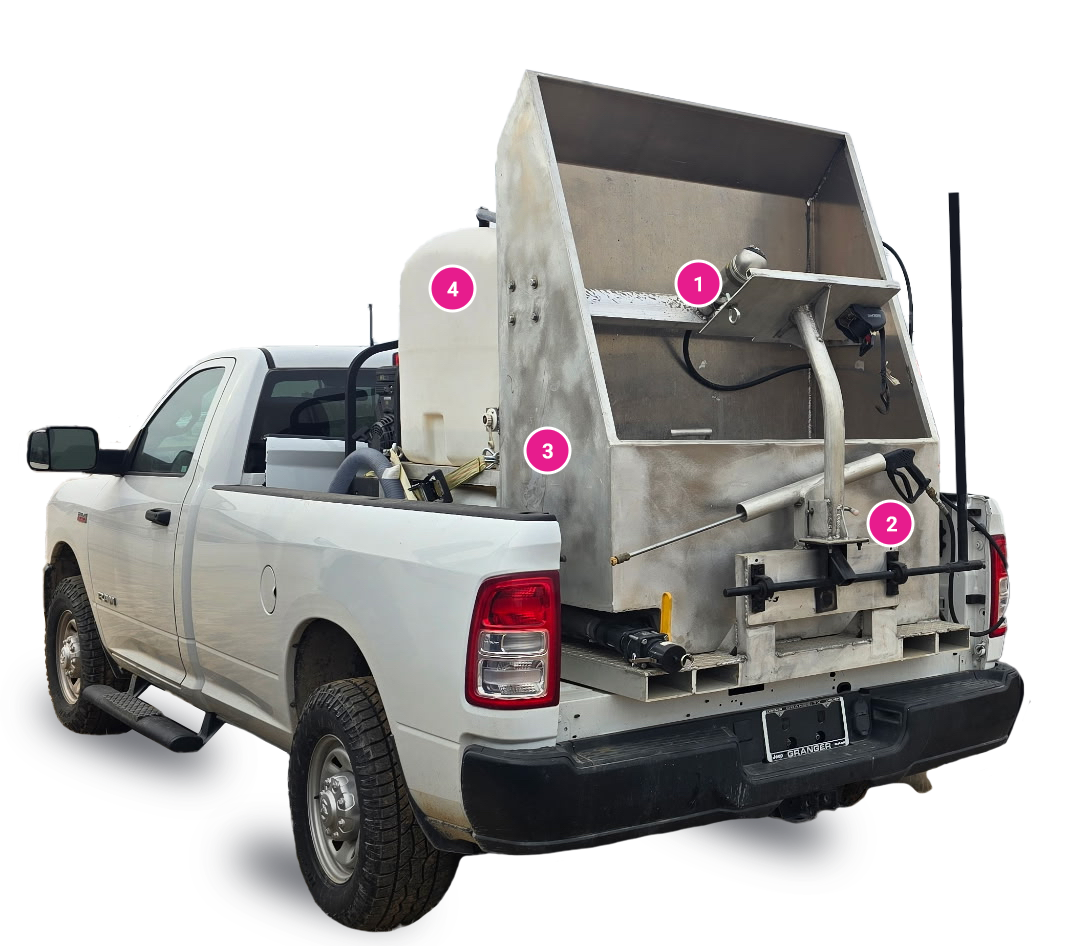
Choosing a bin cleaning rig is a big decision! You’re not just buying equipment: you’re choosing how your business will operate every day, how much physical work you’ll do, and which customers you can confidently serve.
One of the most important choices is the lift system.
For the TC200K skid, you can choose between the TC200K-L Leverage Lift Skid, priced at $39,995, and the standard TC200K hydraulic model, priced at $49,995. Both systems include approximately 200 gallons of fresh water capacity and 200 gallons of dirty water capture, along with the equipment needed to clean residential trash bins professionally.
That’s a $10,000 difference!
And here’s the key thing buyers need to understand: these two skids are the exact same proven platform in every way except for the lift type.
Everything else is the same:
- Approximately 200 gallons of fresh water
- Approximately 200 gallons of dirty water capture
- The pump system
- The spray system
- The skid build
- The overall cleaning platform
So, is the hydraulic lift automatically the better choice? Not necessarily. Is the leverage lifter just a stripped-down version that you’ll regret buying? Absolutely not!
The decision really comes down to one question: which lift do you want on the same proven skid platform?
Here’s our honest, shop-floor breakdown.
TC200K vs. TC200K-L: What’s the Main Difference?
The standard TC200K – The Skid uses a hydraulic lifting system. With the push of a control, the hydraulic lifter raises and positions the bin for cleaning.
The TC200K-L Leverage Lift Skid System uses a mechanical leverage-based lifting system instead of hydraulic lifting components.
And that’s really the whole story: the lift is the only difference.
Both units are the same skid platform and are built around the same basic business purpose:
- Cleaning residential trash and recycling bins
- Heating and pressurizing wash water
- Capturing dirty water instead of allowing it to run into the street
- Giving you a professional mobile setup
- Supporting a dedicated bin cleaning route
They also share the same core platform components and layout, including:
- Approximately 200 gallons of fresh water capacity
- Approximately 200 gallons of dirty water capture
- The same pump and spray system concept
- The same skid platform and overall build
So you’re not comparing two completely different machines. You’re comparing the same proven skid with two different lift choices.
The major difference is how the bin gets lifted: and that difference affects your purchase price, maintenance, operator effort, speed, and long-term growth strategy.
Think of it like choosing between a manual transmission and an automatic transmission. Same vehicle concept, different operating feel. Neither is “wrong,” but one may fit your work better than the other!
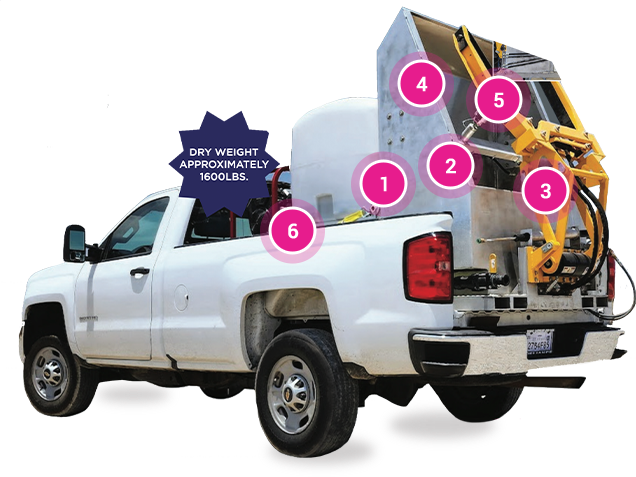
Advantage No. 1: The TC200K-L Saves You $10,000 Up Front!
Let’s start with the obvious advantage: price.
At $39,995, the TC200K-L gives you a professional 200-gallon skid system for $10,000 less than the $49,995 standard TC200K hydraulic model.
That is not pocket change!
You could put that money toward:
- Business registration and insurance
- A dependable tow vehicle
- Route management software
- Website development and branding
- Door hangers, postcards, and local advertising
- Fuel and operating reserves
- A down payment or financing cushion
When you’re starting a new service business, cash flow matters enormously. A lower equipment investment can give you more breathing room during the first few months while you build recurring customers.
We’ve seen many new operators make the mistake of spending every available dollar on equipment, then struggle to market the business. That’s backwards! The equipment gets you ready to work, but marketing puts bins on your route.
If the leverage lifter allows you to start sooner and keep more money available for customer acquisition, that $10,000 savings can make a real business difference.
Advantage No. 2: Fewer Moving Parts Means Easier Maintenance
Hydraulic systems are powerful, reliable, and extremely useful: but they are also more complex.
A hydraulic lift can include:
- A pump
- Hydraulic lines
- Cylinders
- Fittings
- Seals
- Valves
- Fluid reservoirs
- Control components
Every additional component creates another item to inspect and maintain. A damaged hose, leaking fitting, worn seal, or failed cylinder can take the lift out of service until the problem is repaired.
The leverage lifter removes the hydraulic lift circuit from that equation. There’s no lift pump, lift cylinder, or hydraulic fluid dedicated to raising the bin. That means fewer parts to leak, fewer components to troubleshoot, and fewer specialized repairs.
The reality is simple: mechanical equipment is often easier to understand and repair in the field.
If you’re operating outside your home market: or you’re a solo owner without a full maintenance department: that simplicity matters. A basic mechanical problem can often be identified quickly. You may be able to tighten, adjust, replace, or repair the issue without waiting for a hydraulic technician.
That’s a huge advantage when downtime costs you appointments and revenue!
Advantage No. 3: The Leverage Lifter Keeps the System Simpler
The TC200K-L does come in a little lighter because it doesn’t carry the same hydraulic lift hardware, plumbing, and related components as the standard TC200K, but we want to be honest here: that weight difference is not a major deciding factor for most buyers.
In real-world terms, you’re only talking about maybe a couple hundred pounds, which generally is not a big deal for loading or unloading the unit, and it has little to no meaningful effect on fuel economy in most setups.
The more important point is simplicity.
The TC200K platform already includes a practical approximate 8-foot by 4-foot aluminum base, forklift slots, tie-down points, a custom aluminum hopper, and a 360-degree cleaning head. By keeping the lift system mechanical instead of hydraulic, the TC200K-L stays straightforward and easy to understand.
That said, you still need to match your trailer, truck, payload, and towing setup correctly. Always verify your vehicle and trailer specifications before putting any equipment into service.
Advantage No. 4: It’s a Strong Fit for Solo Operators
If you’re planning to clean residential bins yourself, the leverage lifter can be a very practical choice.
Residential trash carts are generally much more manageable than large commercial dumpsters. With proper technique, the leverage system helps you position and tip the bin without requiring a hydraulic lift for every movement.
The TC200K-L is especially attractive if you:
- Are starting as a one-person operation
- Expect light-to-medium residential routes
- Want to keep monthly payments lower
- Prefer equipment you can understand and service
- Have good physical conditioning
- Are willing to learn the correct lifting technique
- Want to validate your market before making a larger investment
You’re not trying to boil the ocean on day one. You’re building a route, proving demand, and creating recurring revenue.
For that business model, the TC200K-L can be a no-brainer!
Advantage No. 5: It Gives You a Future-Proof Upgrade Path No One Else Offers
Now here’s a BIG one, and it’s something most buyers don’t even realize they should be asking about!
Our leverage lifter is designed around the same attachment and landing pattern as our Perkins hydraulic lifts. That means if you start with the leverage lift today and later decide you want to convert to hydraulic, Viking Upfit is the ONLY company that can offer that conversion path.
That is a huge industry advantage!
Why does that matter so much? Because most lower-cost entry equipment forces you into a dead-end decision. You buy the manual or leverage-style setup to save money up front, then when your route grows, you find out you can’t upgrade cleanly. Now you’re looking at major fabrication, reconfiguration, or replacing equipment entirely. That gets expensive fast.
Our setup is different by design.
Because the leverage lift hookup and landing point match our hydraulic lift architecture, you’re not just buying a lower-cost starter system. You’re buying into a future-proof platform with a real upgrade path.
That gives you a few very practical business advantages:
- You can start at the lower $39,995 price point
- You keep the option open to upgrade later as your route grows
- You avoid painting yourself into a corner with a one-off lift design
- You reduce the chances of expensive retrofit headaches down the road
- You stay within the Viking Upfit equipment ecosystem instead of starting over
- You can make an entry-level buying decision without sacrificing long-term flexibility
Here’s the thing: that kind of planning matters. Maybe you start with 25 to 40 residential stops a week and the leverage lift makes perfect sense. But what happens six months from now if you’re pushing 80, 100, or 120 bins and you want push-button lifting? With our system, that growth path is actually on the table.
In other words, the TC200K-L isn’t just an affordability play. It can also be a smart strategic move for buyers who want to get in now and upgrade later without scrapping their original plan.
That’s not a small detail. In this industry, it’s a serious competitive advantage.
Advantage No. 6: The Leverage Lifter Isn’t Limited to Just the TC200K-L Skid
This is another point that’s worth knowing if you’re planning your setup carefully.
The leverage lifter is not just an option on the TC200K-L skid. We can also offer the leverage lifter on our single bin trailers and as a standalone hopper lifter system.
That makes it a very flexible option for all kinds of builds and business models, not just one skid configuration.
Maybe you want a simpler trailer setup. Maybe you already have part of a system and need a hopper lifter solution. Maybe you’re trying to put together a more custom entry-level package without jumping straight into a full hydraulic build. That’s exactly where this kind of flexibility matters.
And here’s the honest part: some of these configurations may or may not be listed on our website or in the catalog yet.
So if you’re wondering, “Can you put a leverage lifter on this setup?” or “Is there a version for the style of rig I want to build?” the best move is simple: reach out and ask.
If we can build it, configure it, or point you toward the smartest option, we will. Sometimes the best equipment solution for your business isn’t the one that happens to be listed online today!
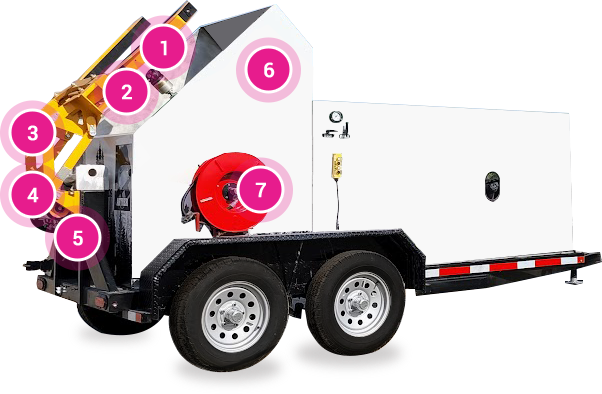
Disadvantage No. 1: You’ll Need More Physical Effort
Here’s where we need to be completely honest: a leverage lifter is not push-button automation.
Also, in the industry, you may hear this type of setup called a “Manual Lift.” That’s common terminology, but let’s clear something up right away: “manual” does not mean you’re dead-lifting heavy cans with brute force all day long. It does require some manpower, and it is absolutely more physical than a hydraulic lift. But people often hear “manual” and assume it takes a massive amount of manpower, and that’s just not the case. Our system uses leverage to do the hard part, which makes it efficient and manageable when it’s used correctly.
You’ll need to use the lifter correctly, position the bin, work with the leverage point, and control the movement through the cycle. The system helps you move the bin, but you remain part of the lifting process.
That means operator technique is essential.
You need to:
- Keep your back straight
- Use your legs and body position properly
- Avoid twisting while handling a loaded bin
- Keep the lifter on stable ground
- Control the bin instead of letting it swing or drop
- Learn the proper sequence before taking on a full route
A new operator may need some practice before the process feels natural. That’s normal! Just like learning to use a pressure washer wand, hose reel, or wash head, you get faster and more confident with repetition.
So let’s call it what it is: more physical work than a hydraulic lift, but not a muscle-powered wrestling match either. The leverage lift does require some effort, and you’ll still feel the difference after a long day, but it does not require a massive amount of manpower like some people assume.
Disadvantage No. 2: Cycle Times Can Be Slower on High-Volume Routes
Let’s give you the honest real-talk answer here: yes, the total process per bin is usually slightly longer with the leverage lifter than with a hydraulic lift.
Why? Because the leverage system uses a strap system to secure the cans before lifting. That strap setup is extremely practical because it’s universal for most trash bins, which is a big advantage in the real world when you’re dealing with different cart styles. On top of that, the strap is self-retracting, which helps keep the process efficient and prevents it from turning into a clumsy, time-wasting mess.
That said, it is still one more step in the cycle compared to a push-button hydraulic lift.
Hydraulic lifting is faster and more consistent when you’re processing bin after bin after bin.
On a residential route with 30 or 40 bins, the difference may be manageable. On a high-volume route with 100-plus bins, the extra positioning and physical steps can add up.
A hydraulic system lets you perform the lifting motion with minimal operator effort and repeat the process consistently. That can improve workflow when:
- You’re cleaning large numbers of bins per day
- You have strict commercial service windows
- You’re paying an employee by the hour
- You’re operating multiple crews
- You need to maximize revenue per route day
The leverage lifter can absolutely still get the job done efficiently, and the self-retracting strap helps keep cycle times reasonable. But we’re not going to sugarcoat it: it’s still slightly more work, and slightly more time per bin, than hydraulic.
This is where the hydraulic TC200K starts to earn its higher price.
Disadvantage No. 3: It May Not Be the Best Fit for Higher-Volume Growth
This is an important clarification: both lift styles are designed to lift empty trash cans only. We do not lift full carts, so “heavy full cans” really should not be the deciding factor here.
The real difference is not lifting power on full trash cans. The real difference is operator effort and speed over the course of a route.
If your business plan involves servicing more bins per day, tighter route density, or growing into faster-paced operations, the hydraulic TC200K starts to make more sense because it is simply less physical and a little quicker per bin.
Hydraulic lifting provides:
- Better operator ergonomics
- More consistent cycle speed
- Less physical effort throughout the day
- Easier repeatability on larger route volumes
- A clearer path toward higher-throughput operation
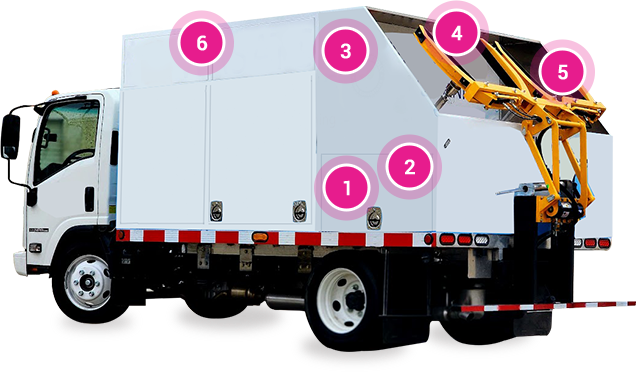
Disadvantage No. 4: Scaling May Require an Upgrade Later
The leverage lifter can help you get into the industry, but it may not be the final equipment choice for every business.
What would you do if your route grows from 40 residential bins per day to 120? What happens when a property manager asks you to service several apartment communities every week? What if you hire an employee who isn’t as strong, experienced, or comfortable with manual lifting?
Those are good problems to have: but you should plan for them!
The TC200K-L may be the right first step, but a growing operation may eventually benefit from the standard hydraulic TC200K or a larger platform. For example, our broader cleaning equipment lineup includes larger trailers and truck systems designed for higher-capacity operations.
That doesn’t make the leverage lifter a bad purchase. It simply means you should buy according to your business plan.
Who Should Choose the TC200K-L?
We recommend the TC200K-L Leverage Lift Skid if you are:
- Starting a residential bin cleaning business
- Operating solo or with one trusted helper
- Focused on light-to-medium routes
- Watching your initial investment carefully
- Comfortable doing some physical work
- Looking for simpler field maintenance
- Testing a new market before scaling
- More concerned with affordability than maximum throughput
The $10,000 savings gives you a much lower barrier to entry, while the 200-gallon fresh and dirty water capacities provide a practical working platform for many residential routes.
It’s simple, efficient, and built around getting you into the market without overbuying equipment!
Who Should Choose the Standard TC200K Hydraulic Model?
Choose the standard TC200K hydraulic skid if you plan to:
- Clean high volumes every day
- Service apartment complexes or large property portfolios
- Hire employees or operate multiple shifts
- Minimize physical strain
- Prioritize speed and repeatability
- Build toward denser, faster routes
- Treat operator ergonomics as a top priority
The additional $10,000 is a meaningful investment, but hydraulic lifting can pay for itself through improved productivity, reduced fatigue, and faster cycle times on larger route days.
Our Straight Recommendation
Here’s the short version!
Choose the TC200K-L Leverage Lift if you want a budget-friendly residential start. It costs $39,995, saves you $10,000 up front, has fewer lift components, avoids hydraulic lift fluid and leaks, and gives you a unique future upgrade path into hydraulic later.
Choose the standard $49,995 TC200K hydraulic model if you want faster operation and less physical effort from day one. The higher investment gives you better ergonomics, quicker cycle times, and more room to grow into larger route volume.
Neither option is universally better. The best unit is the one that matches the business you’re actually building: not the business you might build someday.
If you’re still unsure, reach out before you pull the trigger. We can talk through your expected bin count, residential-versus-commercial mix, vehicle setup, budget, and growth plan. We build the equipment, but more importantly, we help you make a decision that makes sense for your operation!
Need Help Choosing Your Bin Cleaning Equipment?
Visit VikingUpfit.com to explore available equipment and learn more about building your bin cleaning business.
- Website: VikingUpfit.com
- Phone: 210-971-4980
- Email: clean@thetrashcancleaners.com
- Facebook community: facebook.com/groups/bincleanersnetwork
Have questions about the TC200K-L, the standard TC200K, financing, route planning, or commercial versus residential opportunities? Send us a message or request information below: we’re happy to help you choose the right starting point!